

Obesity, GLP-1s, and the science the scale cannot show
Dear Kenneth,
GLP-1 receptor agonists did more than produce dramatic weight loss results. They confirmed something the field had been circling for years: that obesity is a systemic metabolic disease, and that weight was always the wrong primary measure of its severity — or of a therapy’s value.
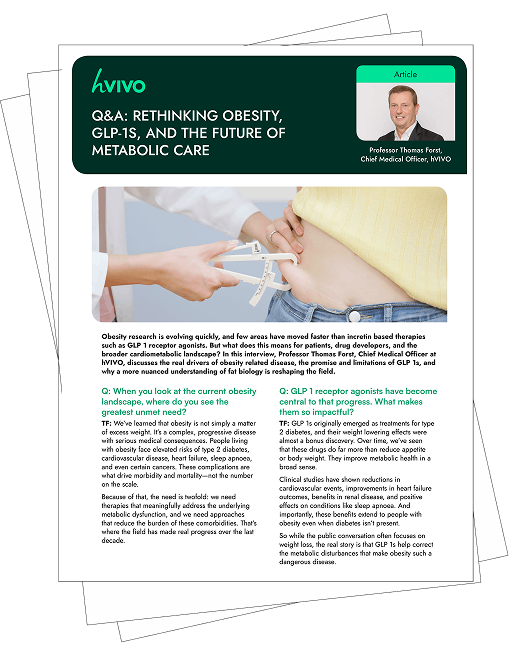
In a Q&A that challenges the assumptions still shaping many development programmes, Professor Thomas Forst, CMO at hVIVO, sets out what the evidence now shows — on ectopic fat, on metabolic risk, on what GLP-1s actually do — and what it means for the next generation of cardiometabolic therapies.
Key insights include
- Why the complications of obesity — cardiovascular, renal, hepatic — are what drive morbidity and mortality, not body weight itself
- How GLP-1s correct metabolic disturbances across multiple organ systems — and why the clinical story goes well beyond appetite suppression
- Why ectopic fat in the liver, heart, pancreas, and skeletal muscle is a more clinically meaningful measure of risk than BMI
- What the shift toward dual and triple agonists means for endpoint strategy and programme differentiation
- Why lifestyle modification remains clinically necessary even in the era of highly effective pharmacotherapy — and what the evidence shows about long-term body composition outcomes
Don’t want to receive these emails? No problem, simply click on the Unsubscribe link below.
By accessing this content, you are permitting Pharma Ignite or a third party to contact you regarding the content (by phone or email).
© 2026 Marketing Masters Hub. All rights reserved.